

General
The Po Valley is the northernmost of the Cuneo valleys between the provinces of Cuneo and Turin in the Alps. Immersed in beautiful beech and chestnut woods and surrounded by beautiful mountains where Monviso, the Vesulus of the Romans, stands out. This corner of Piedmont, still little known, reserves many pleasant surprises and offers visitors several keys to the reading: art, nature, sport, gastronomy, to name a few.
Castello della Manta, international Gothic in the Marquisate of Saluzzo in Piedmont.
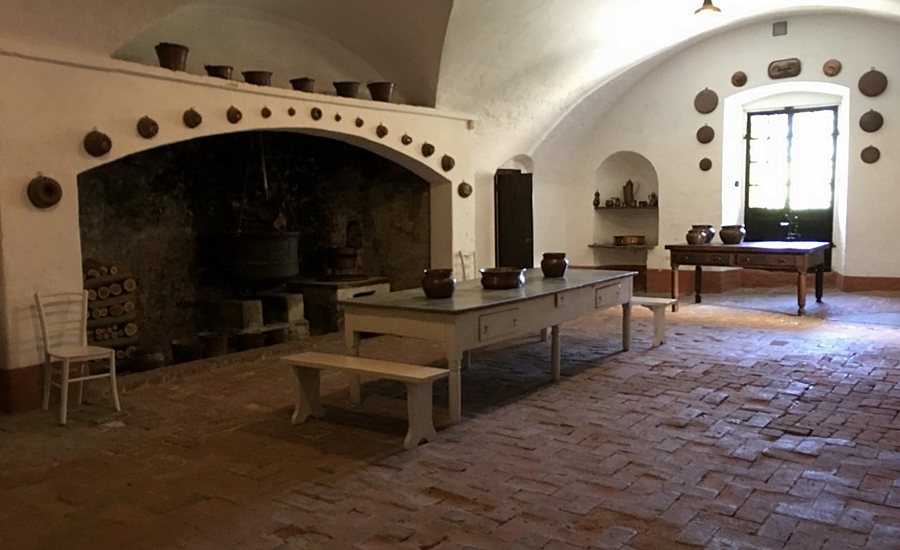
On the hills of the province of Cuneo, the Manta Castle is the result of different constructions that overlapped or added to the nucleus of the original fort dating back to the XII century.
It was at the beginning of the fifteenth century that the castle began to take on its current appearance and, thanks to the work of the noble Saluzzo della Manta family, it gradually transformed from a medieval castle into an elegant palace.
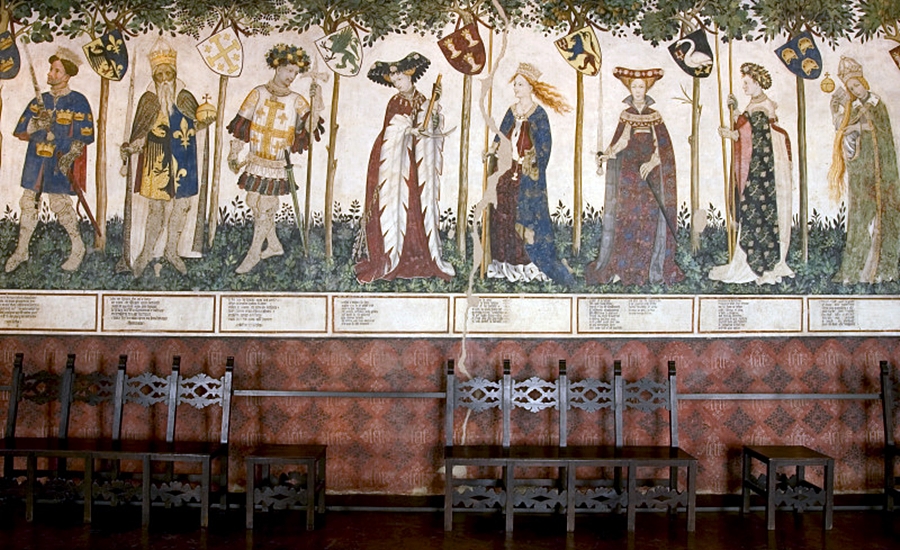
Inside you can visit several prestigious rooms: the Baronial Hall, one of the most amazing examples of international Gothic painting with a cycle of frescoes depicting “Heroes and Heroines” and the mysterious representation of the “Fountain of Youth” on the opposite wall, the sixteenth century Grottesche Hall, with its famous richly decorated vault, and the beautiful frescoed gallery.
The nearby parish church of Santa Maria al castello dates back to the 15th century. In the apse there is an important cycle of fifteenth-century frescoes depicting episodes from the life of Christ. Of particular value are the decorations of the funeral chapel of Count Michele Antonio, dating back to the 16th century.
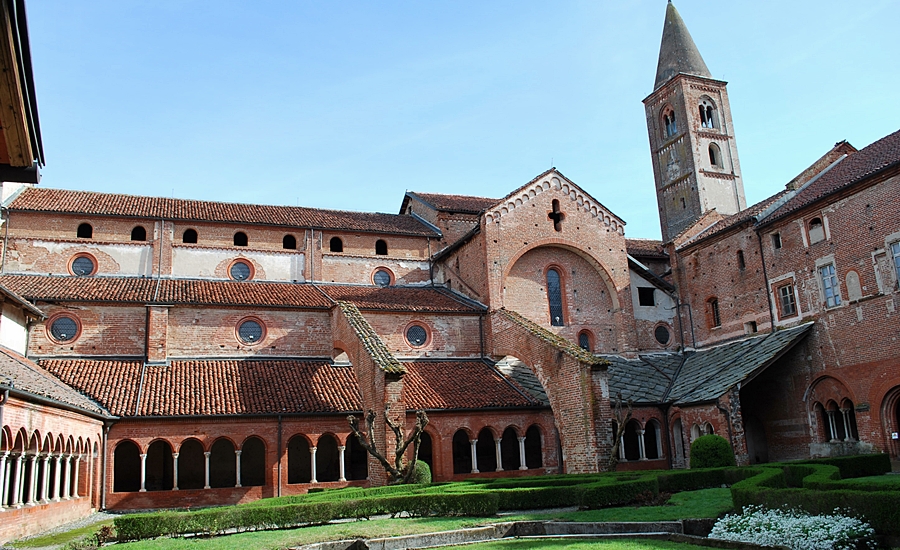
The Staffarda Abbey, the admirable Cistercian architecture in Piedmont The Cistercian Abbey of Staffarda is located about 7 km from Barge and 10 km from Saluzzo on inhospitable land donated in the early twelfth century by the Marquis Manfredo I to the Cistercian monks ( which are a reform of the Benedictine Order) who reclaimed it and built an imposing and articulated complex of buildings including the abbey church, the cloister, the guesthouse, the covered market.The Church, with three naves, is in Romanesque style- Gothic. The interior is bare, but austere, decorated by the alternation of the red and gray colors of the cross vaults and the pillars which are all different from each other, in size, shape, capitals and decorations. Leaning against the second pillar on the left is the late Gothic pulpit. The sixteenth-century polyptych by Pascale Oddone dominates the high altar. The central structure, observable when the large altarpiece is open, houses scenes from the life of the Virgin made up of carved statuettes. On the inside of the two doors are painted the Resurrection, the Ascension of Christ, the descent of the Holy Spirit and the Coronation of Mary. When the polyptych is closed, you can admire San Benedetto, San Bernardo di Clairvaux, the archangel Gabriele and the Virgin Annunziata. The square cloister, located south of the abbey church, is characterized by a deep red color punctuated by white marble columns.
The bell tower, built in 1250 is in the Gothic style, surmounted by a brick spire.
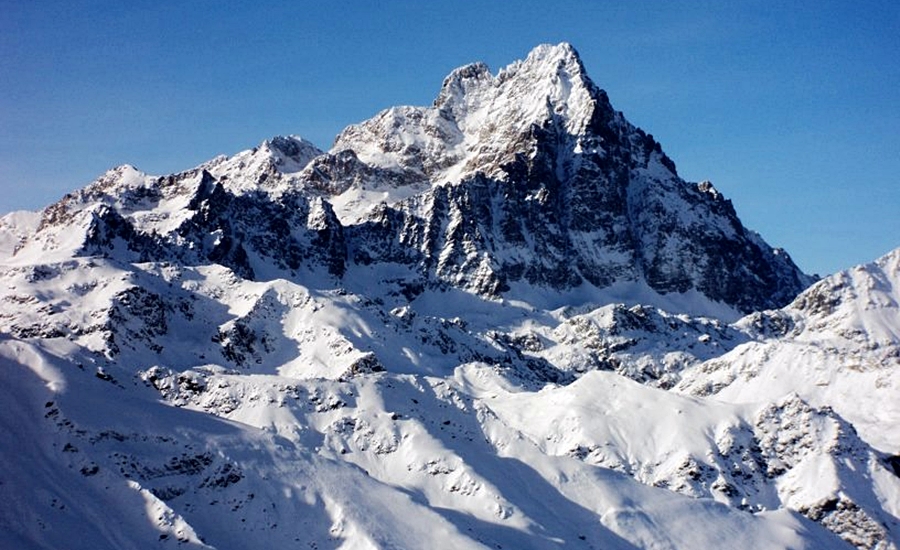
Proceeding towards the Po Valley, about 20 kilometers away, you reach the slopes of Monviso, the King of Stone, also called Vesulus by the Romans, who seals the whole area of the Po Natural Park with its beauty. The Face has been part of the National and cross-border Biosphere Reserve in the UNESCO “Man and Biosphere” program, which includes a worldwide network of biosphere reserves, which includes 621 biospheres, including 12 cross-border, in 117 countries worldwide.
Montebracco – The Convent of Trappa, a very suggestive religious settlement
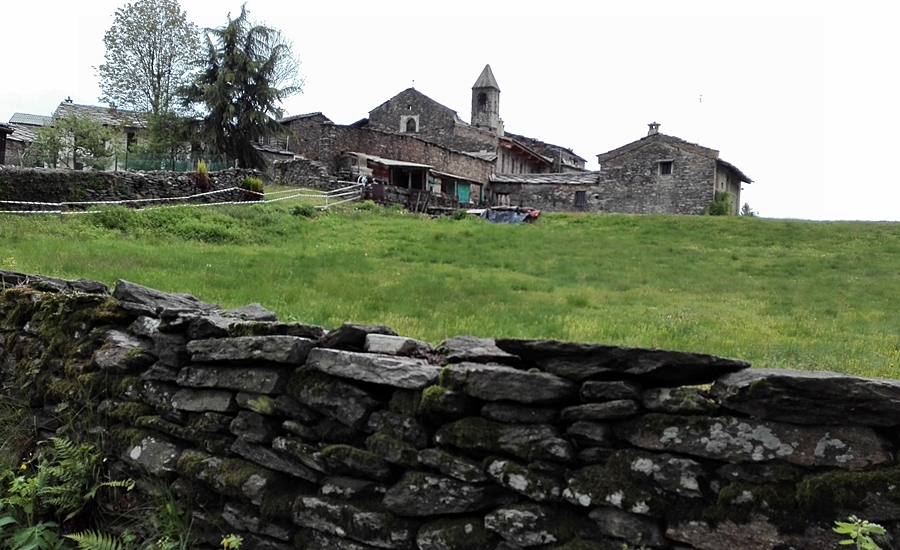
The convent of Trappa is of medieval origin, which is about 5 km from the bed and breakfast, at an altitude of 923 meters, reachable by car along the road that departs from the Barge-Paesana. It was built around 1248 on the homonymous mountain; the foundation of the Trappa is attributed to Sinibaldo Fieschi of Tortona, whose effigy is reproduced in the painted medallion located on the church of Santa Maria.
The complex still shows the purity of the original lines, with the monks’ cells obtained in the place built west of the vast internal courtyard.
The plague of 1630 is considered one of the main reasons for the departure of the Carthusians who abandoned it around 1642. Shortly afterwards it was the subsequent occupation, between 1794 and 1802, by French Trappists and Cistercians fleeing the revolution. It was precisely the echoes of the French Revolution that caused the definitive closure and transfer to private individuals who adapted to peasant homes.
A holiday in the Po Valley following Leonardo’s footsteps.
In 1511 Leonardo da Vinci wrote about Monte Bracco; five hundred years later there are the same suggestions that make it a unique mountain. Located in front of Monviso and Po, it constitutes a large geological, botanical and faunal laboratory; a fantastic book on which to read fascinating testimonies of prehistory: the rock engravings. There are also signs of many people who worked on its stone, such as quartzite and gneiss, in ancient quarries. These are the stones that have been used since ancient times to build homes and religious buildings.
Monte Bracco awaits you with the hope that you will want to follow its peasant architecture with curiosity, respect and wisdom, the complexity of the network of rural paths that winds on the mountain and the diversity of the landscape, austere, built and of fascinating beauty.
Visit Saluzzo at the mouth of the Po Valley.
Capital of the Marquisate of the same name, it preserves the urban characteristics of the fifteenth century almost intact. The historic center nestled on the hill, originally enclosed by a double circle of walls, preserves in a maze of streets and stairways, churches, elegant noble palaces with loggias and roof terraces and hidden gardens. Over all, the imposing Castile dominates, dating back to 1270, built by the Marquis Tommaso.
Saluzzo and its territory offer splendid testimonies of art, crafts and history, they are the ideal place for a holiday of good and inexpensive cuisine, naturalistic excursions, mountain trips, climbing on rock gyms , of the less frequented ski slopes of the Po Valley, in short, in the name of a varied tourist offer in southwestern Piedmont.
Saluzzo is also an important center of antiques, art furniture and restoration. There are many wood and iron artisan workshops enhanced by the annual Antiques (May) and Furniture (September) Exhibitions.
 Piedmont has a great story behind it. Here he was born the first idea of bringing Italy into a single state. Turin was the first capital of a united Italy in 1861. Here the time made the whole history of Italy. Piedmont is a large mountainous region, surrounded on three sides by the Alps, and