
General
Departed from Cagliari, we follow the SP17 that will take us to visit Villasimius.
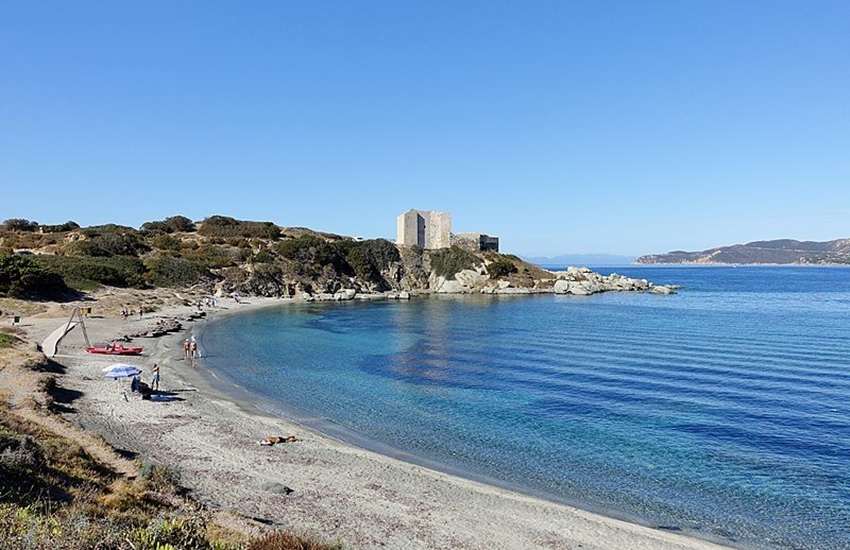
After passing the Sinnai coast with the tourist settlement of Solanas, we enter the municipality of Villasimius and begin the visit of its coast. After Solanas, the scenic road along the coast takes us, to the detour to the promontory of Capo Boi, which is located about ten kilometers from Villasimius, and is topped by the homonymous tower, which belongs, however, still in the Sinnai area and that we described in the previous stage of our trip. Under the promontory of Capo Boi there is a bay characterized by a very jagged coast, with small coves, beaches and small cliffs.
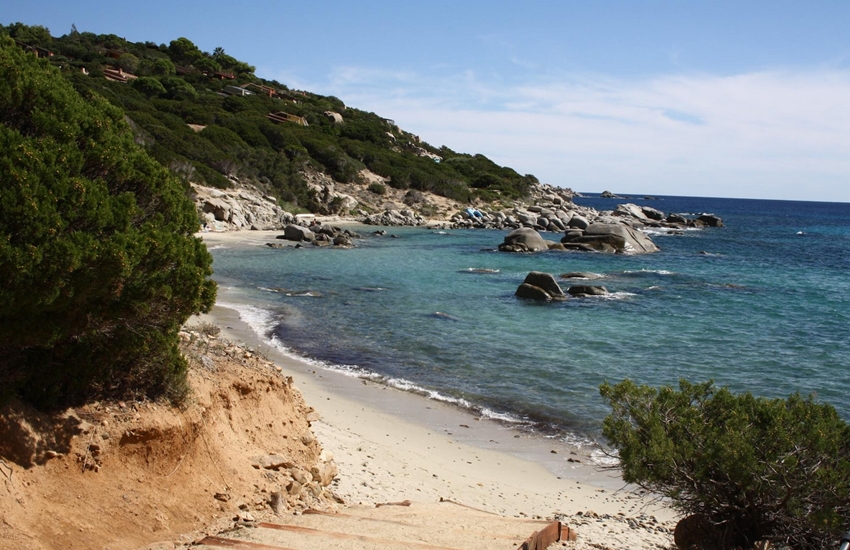
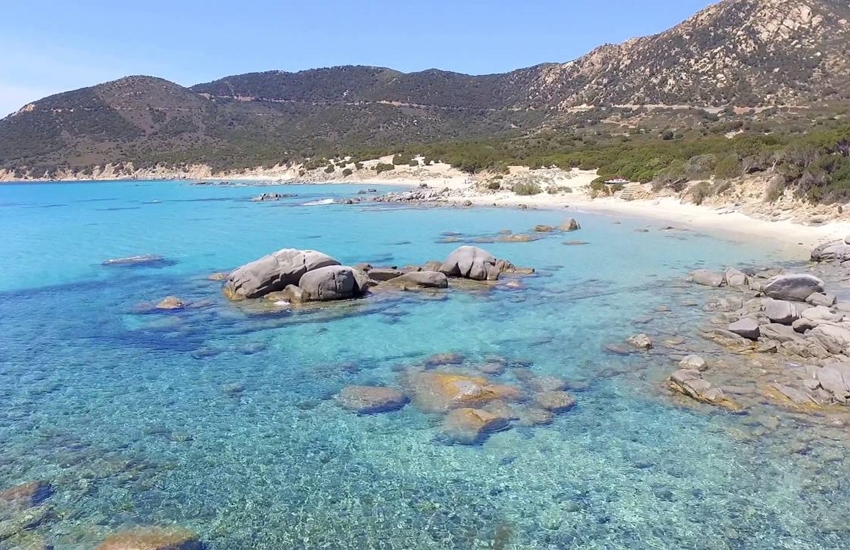
Almost three kilometers further, we enter the hamlet of Porto sa Ruxi , and here we find a sign that brings us, after two hundred meters of slightly uneven white road, to the small Bay of Porto sa Ruxi, one of the few in a position sheltered from the mistral. In the summer season you can only enter on foot. Behind the coast there is also a beautiful Mediterranean scrub and juniper trees.
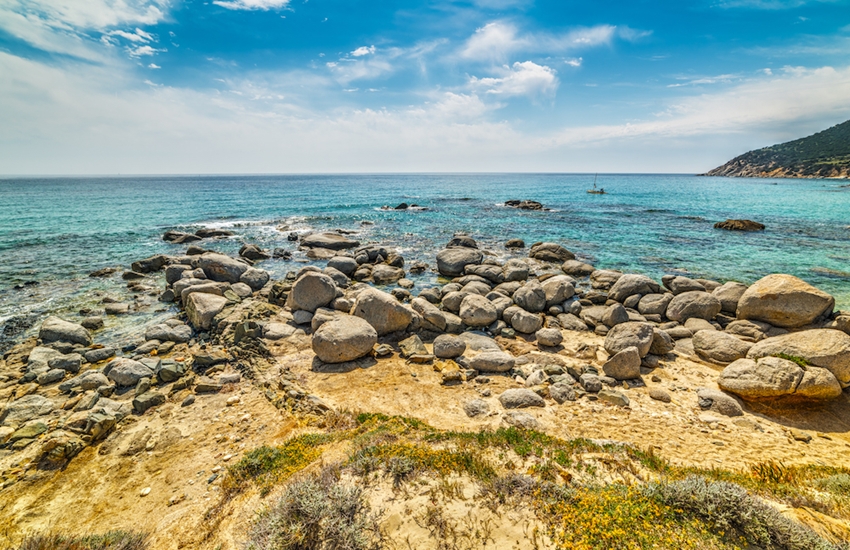
Here, between granite cliffs, the long beach of Porto sa Ruxi develops, a sort of bay, characterized by a three-arched beach, with fine white sand, protected behind it by low rocks and a dense Mediterranean scrub. It is made up of some suggestive sandy beaches, separated by rocky stretches and surrounded by rocks and beautiful junipers.
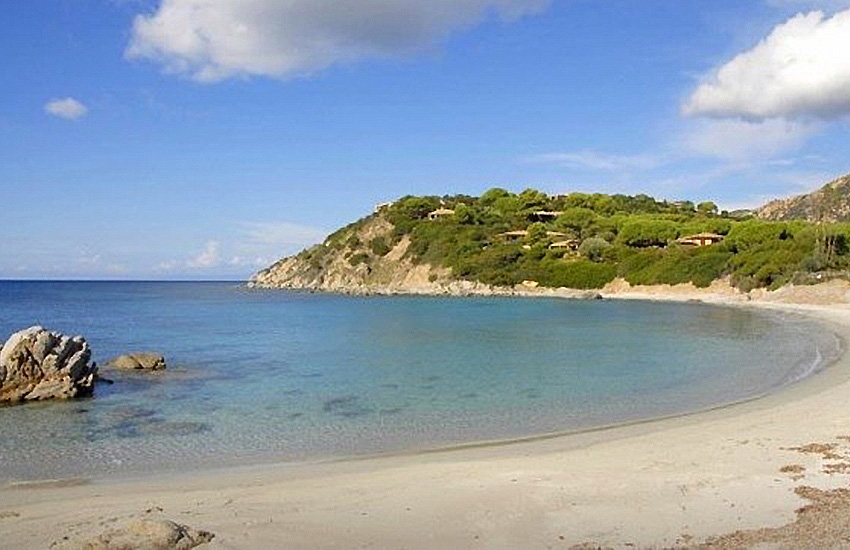
Along the road that leads from Porto sa Ruxi to Campus, there are some small and beautiful beaches on the right of the road. Among others, there is the small beach of Capo Boi, and, past a promontory, to the east of it is the small beach Piscadeddus. The landscape is hilly to the sea and the vegetation is low and bushy.
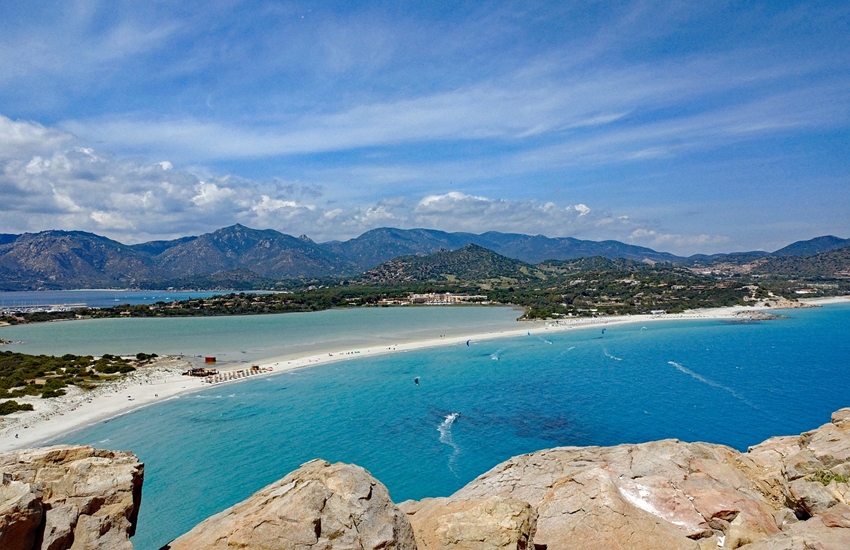
The road, continuing, passes the panoramic point along the SP17, and overlooks the beautiful Gulf of Carbonara, which stretches from Capo Boi to Villasimius. About two kilometers and six hundred meters from Porto sa Ruxi, we reach the hamlet of the village Mandorli. Here there is a detour on the right which, downhill, leads to the parking lot behind the beautiful and long Campus beach.
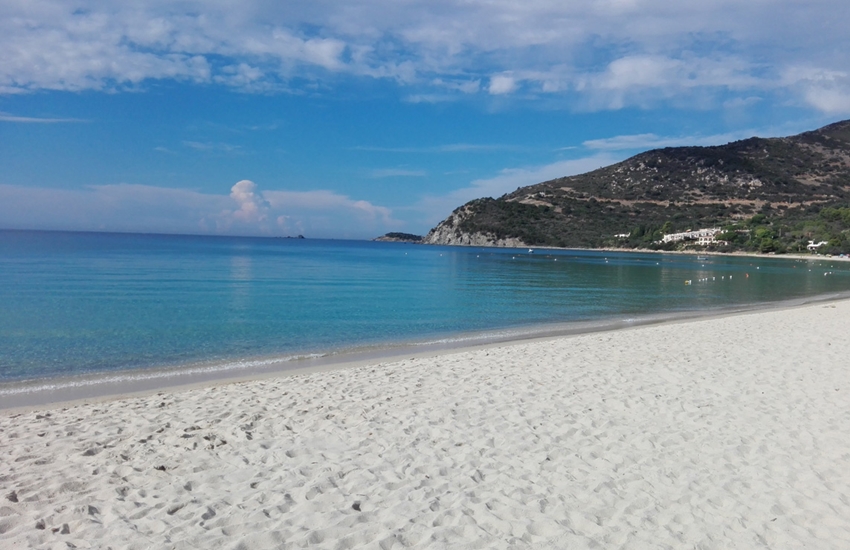
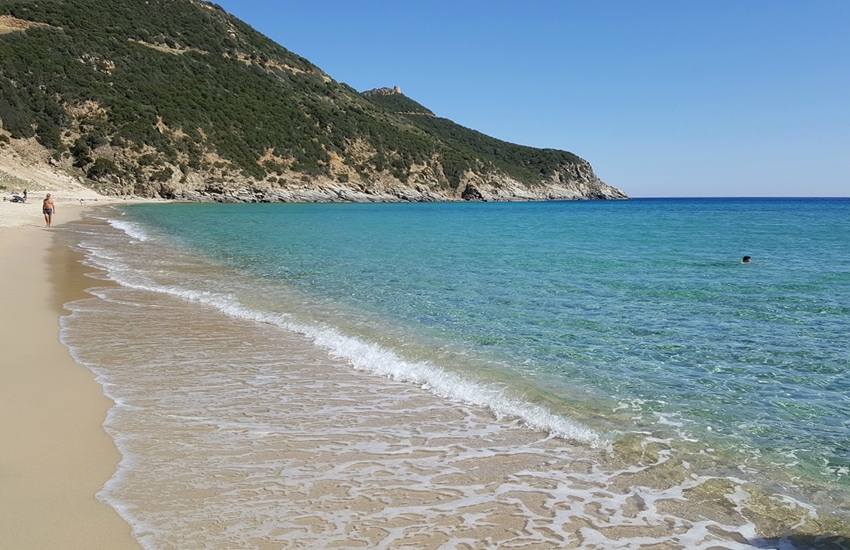
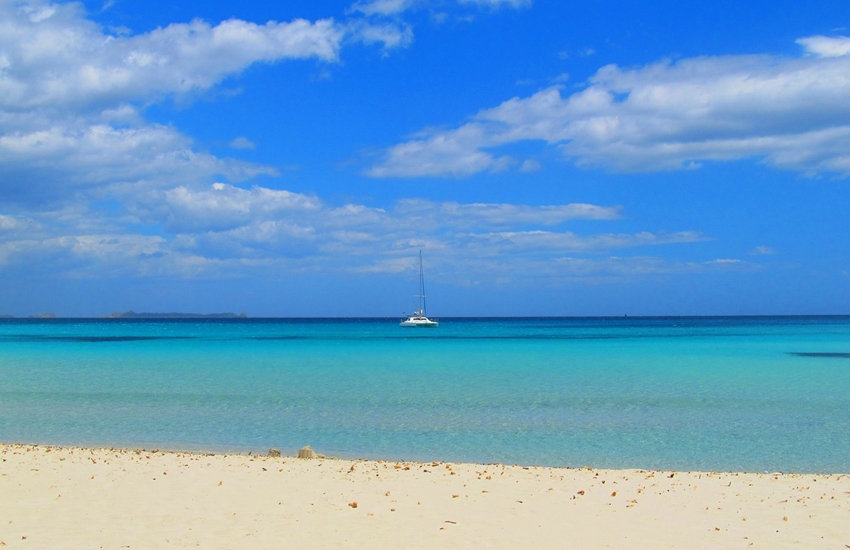
Before reaching Villasimius we find Campus beach. Located at the mouth of a small river, between reeds and Mediterranean scrub that come very close to the shore, it is wide and long, made of soft golden sand that plunges into a crystalline and transparent sea with shades of green and with backdrops that slope gently towards offshore.
At the crossroads taking Via Santa Maria to the right, we head towards the hamlet of Santa Maria. Just at the crossroads, a path to the right, between the arrival of the SP17 and via Santa Maria, leads us to the small country church of Santa Maria.
Looking at the facade of the Church, on its right are the remains of the Roman Baths of Santa Maria.
Continuing the visit of the Campidano coast, after seven hundred meters we reach the sign indicating the entrance to the town called Villasimius. The town is positioned on the northern edge of the granite promontory of Capo Carbonara, which extends into the sea until it reaches Capo Carbonara at its lower end. To the south of the town, a beautiful road leads to visit the promontory, from whose end you can admire the island of Cavoli. And from this road, we can reach the different beaches that develop on both sides of the promontory. In 1998, the Marine Carbonara protected area of Capo Carbonara was established in the territory of Villasimius, from Capo Boi to the area in front of the Serpentara island.
 Sardinia is closer to French soil than to Italy and is the second largest island in the Mediterranean after Sicily, is located about 190 miles from the Italian mainland. Italians flock to the island in the summer for its beautiful beaches. There is a UNESCO World Heritage Site in Sardinia: the Nuraghi, remains of some