
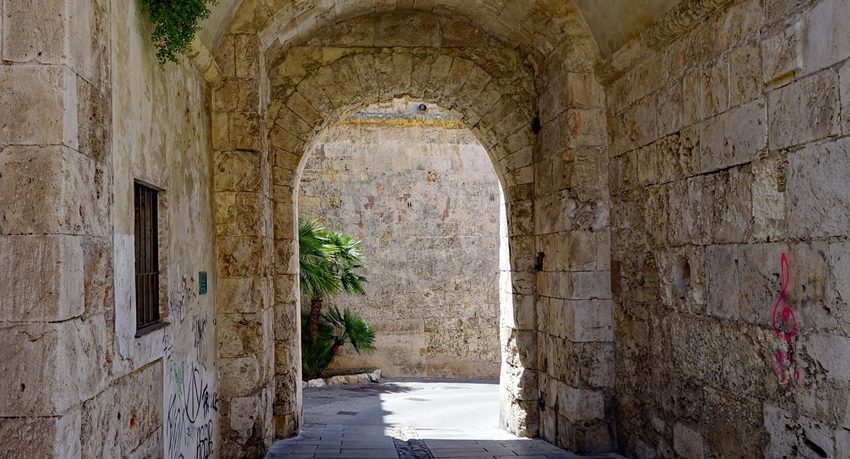
Cagliari, a multi-millennial city, the pulsating center of the Sardinia region
Cagliari, the ancient Karalis founded by the Phoenicians, stands on top of a cliff and is enclosed between the crystal clear waters of the Golfo degli Angeli and those of the salt marshes and ponds of Molentargius and Santa Gilla, one of the lowest wetlands in Europe, where for some years pink flamingos and sea swallows have returned to nest.
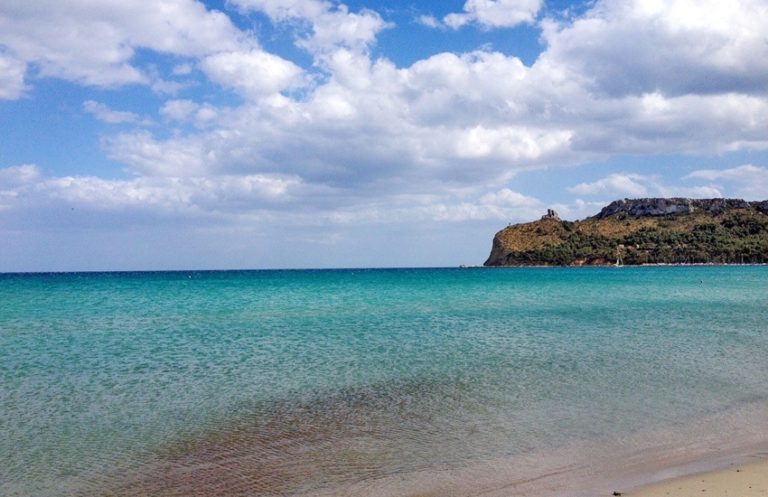
But the real treasure of Cagliari is the Poetto beach, a few minutes from the center, with its 4 km of fine sand, the bathing establishments and the Spanish Tower.
Another precious source of wealth from a tourist point of view are the beautiful coves that follow one another east of Cagliari along the entire coast: Cala Regina, Cala Solanas, Capo Bol, Torre delle Stelle and finally Villasimius with the islet of Serpentara and the Cavoli island,, a small fishing and stonemasons village transformed in the early 60’s into a real holiday paradise.



Below some of the most beautiful places to visit in Cagliari:
The Basilica and the Sanctuary of Nostra Signora di Bonaria.
 First and sublime example of Gothic-Catalan architecture, with the large limestone facade and bronze portals. According to the legend in the fourteenth century, some Catalan sailors, surprised by a terrible storm, decided to throw the cargo into the sea, including a heavy crate. As soon as the crate was thrown overboard, the storm subsided. The chest, containing a wooden statue of the Virgin Mary, landed in Cagliari, just below the Bonaria hill and every 24 April, the legendary anniversary is celebrated.
Archaeological Museum

The city’s archaeological museum is the most important on the island. Located inside the museum complex of the Citadel of museums in Piazza Arsenale 1. Here, to the delight of all future Indiana Joneses, materials from excavations and dated from the pre-nuragic period (over 300 thousand years ago) are exhibited.
Cathedral of Santa Maria

In Cagliari Piazza Palazzo is a place that offers wonders. On one side, the Cathedral of Santa Maria, the episcopal seat, a true union of different artistic styles, which houses seven centuries of historical memories of the city. The Cathedral, dedicated to the Assumption and Santa Cecilia was built in the 1200s and has a Gothic-Pisan facade, colorful interiors rich in marble and frescoes and an amazing Crypt of the Martyrs that cannot leave you indifferent. This was built in 1618 by Archbishop Desquivel to honor the remains of Sardinian martyrs: the shrine carved out of the living rock consists of three chapels with a barrel vault covered with inlaid marble and embellished with stucco decorations.
Palazzo Regio

Next to it is the Palazzo Regio, the ancient residence of the king’s representative during the Aragonese, Spanish and Savoy dominations, currently the seat of the Prefecture and the Province of Cagliari.
La Sella del Diavolo
 La Sella del Diavolo is a huge park next to the beaches of Cagliari and directly overlooking the sea. Wild, romantic, imposing, it is the most beautiful part to see in Cagliari and it is highly recommended to take a boat tour to the Sella del Diavolo to enjoy its spirit.
Torre dell’Elefante
 The Torre dell’Elefante and the Tower of San Pancrazio: these are two imposing towers located in the historic part of the city, precisely in the Castello area, were built by the Pisans to improve the defenses in the event of a Genoese attack / other parts. From the top of the towers you can enjoy a memorable panorama.
S. Benedetto market
 It is also interesting to visit the S. Benedetto market in Cagliari. Built in the late 1950s, that of S. Benedetto is the market par excellence for the people of Cagliari. Formed by a structure on two levels, on the ground floor it houses the fish department (true pride of Sardinia) while on the upper floor space for fruit and vegetables, meats and various foods.
The Bastion of Saint Remy
 The Bastion of Saint Remy was fortified in the 19th century on the ancient city walls dating back to 5 centuries earlier. It is one of the symbolic monuments of Cagliari and takes its name from the first Piedmontese viceroy baron of Saint Remy, Filippo-Guglielmo Pallavicini. The style of the structure is classic with white and yellow limestone columns surmounted by Corinthian capitals. Under the large arch there are 2 stairways leading to the Umberto I terrace.
Calamosca
 On the top of the hill of Calamosca, between the watchtower, called del Prezzemolo and the old lighthouse still active, stands the fort of Sant’Agnazio, a structure so accurate, that its great ruins seem to be those of a real castle. From here the view is free on each side and allows you to enjoy a magnificent panorama.
The surroundings of Cagliari
Nora
 For sports and being outdoors, the Nora Lagoon in Nora, Pula (CA), is the one for you. The visitor center offers both educational activities, related to the knowledge of the animals present in the lagoon, respect for nature, and snorkelling excursions also suitable for children.
Molentargius
 For a few years thousands of pink flamingos have been laying their eggs at the Molentargius pond, recently become Molentargius Saline Regional Natural Park: a show worthy of the best proposals from National Geographic, which will make adults and children dream equally.
Villasimius
 Villasimius with its coast, is one of the most famous tourist resorts in Sardinia, appreciated above all for the colors and depth of the beautiful sea and for the beauty of its over thirty-five kilometers of beaches. The advantage of Villasimius is the strategic geographical position that allows you to visit a huge number of beaches, all less than 20 minutes away by car and most of them very close to the town: Solanas, Porto Sa Ruxi, Campulongu, Porto Giunco, Timi Ama, Simius, Punta Molentis, Cala Pira, Cala Sinzias, Monte Turnu, Scoglio di Peppino, Costa Rei, Piscina Rei.
Barumini
 Very interesting to visit is Barumini and its fascinating nuragic complex, the largest on the island. A few steps from the town of Barumini and at the foot of the Giara Park (Tuili, Gesturi, Genoni and Setzu), there is the archaeological site “Su Nuraxi” (the nuraghe) of Barumini, declared in 1997 by UNESCO as a World Heritage Site is certainly the most important monument of the Nuragic civilization in Sardinia.
Sanluri
 Another very charming village is Sanluri with its 13th century castle of the same name, the last residence of the judge Eleonora d ‘Arborea, transformed into a Risorgimento museum.
Carloforte and the Island of San Pietro
 Continuing we find Carloforte, on the western island of San Pietro, with the ancient tuna traps developed by families of Ligurian origin. The island of San Pietro is the second island of the sulcitano archipelago. Its coasts are high and rocky bathed by a crystal-clear sea, while the interior is covered by a thick Mediterranean scrub.
Iglesias and Carbonia
 Finally, we discover Iglesias and Carbonia in the Sulcis-Iglesienti area, with the superb abandoned mines: Buggero, Masua, Nebida, Montevecchio, Ingurtosu, once the most important in Italy, today a veritable outdoor industrial archaeological museum.